Pipeline
We are advancing a diverse pipeline of precision medicines for the treatment of blood cancers and solid tumors.
We are advancing a diverse pipeline of precision medicines for the treatment of blood cancers and solid tumors.
Our pipeline consists of small molecule agents that target cancer signaling pathways, where each program builds on our expertise in precision medicines.
(ziftomenib)*
Ziftomenib is being investigated in up to 50% of AMLs across NPM1-m, KMT2A-r and FLT3-m AML, and in combination with other cancer therapies.
NEXT-GEN FTI
Darlifarnib (KO-2806) is an investigational next-generation farnesyl transferase inhibitor (FTI). Combination therapy using FTIs has the potential to address drug resistance and provide deeper and more durable anti-tumor activity. Darlifarnib is not FDA-approved and safety and efficacy have not been established.
Tipifarnib is an oral investigational FTI that is not FDA-approved. Safety and efficacy have not been established.
The investigational agents and investigational uses of marketed products identified above have not been approved by the US Food and Drug Administration. Safety and efficacy have not been established.
-m, mutated; -r, rearranged; R/R, relapsed/refractory; 7+3, 7 days of cytarabine + 3 days of daunorubicin; IC, intensive chemotherapy; NIC, non-intensive chemotherapy; ALL, acute lymphoblastic leukemia; FLAG-IDA: fludarabine, high-dose cytarabine (Ara-C), granulocyte-colony stimulating factor (G-CSF) and idarubicin; LDAC: Low-dose cytarabine
Progress bars indicate the stage of development based on ongoing or completed activities. A partial bar indicates a phase in progress; a full bar indicates completion of a phase. Bars do not represent scale, duration, or likelihood of success.
*KOMZIFTI (ziftomenib) was approved by the U.S. Food and Drug Administration for the treatment of adult patients with relapsed or refractory acute myeloid leukemia (AML) with a susceptible NPM1 mutation who have no satisfactory alternative treatment options.
**In Nov. 2024, Kura, Kyowa Kirin Co., Ltd. and Kyowa Kirin, Inc. entered into a global strategic collaboration agreement to develop and commercialize ziftomenib for AML and other hematologic malignancies.
Most cancer drugs work by killing diseased cells faster than they kill healthy tissue. But what if you didn’t have to kill the cancer cell? What if you could convince it to differentiate? That’s the mechanism underlying an emerging class of targeted therapies called menin inhibitors.
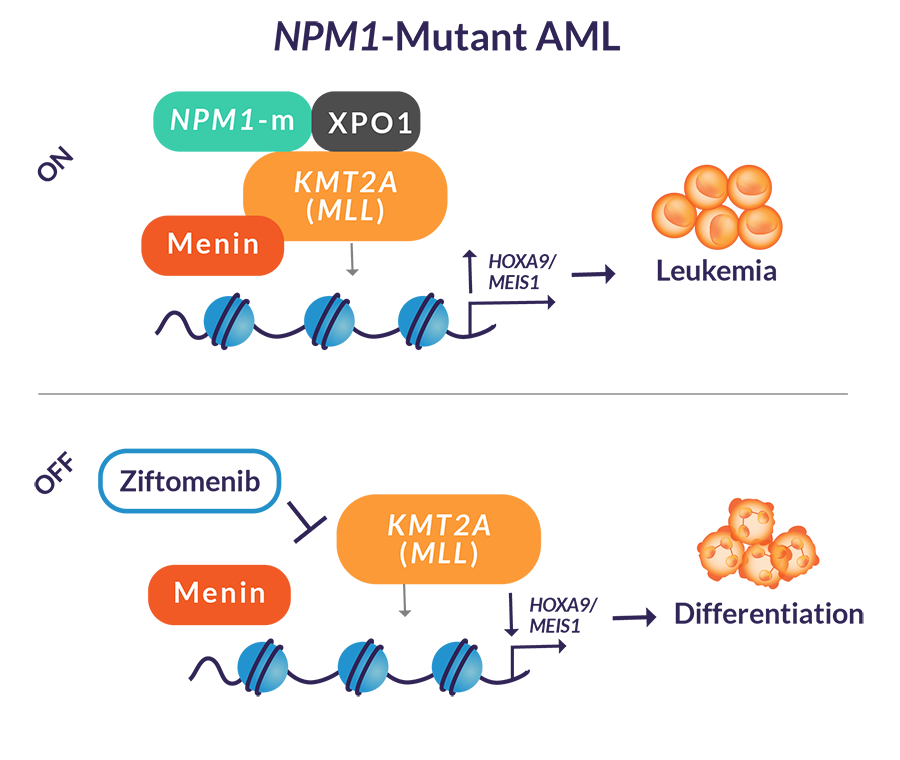
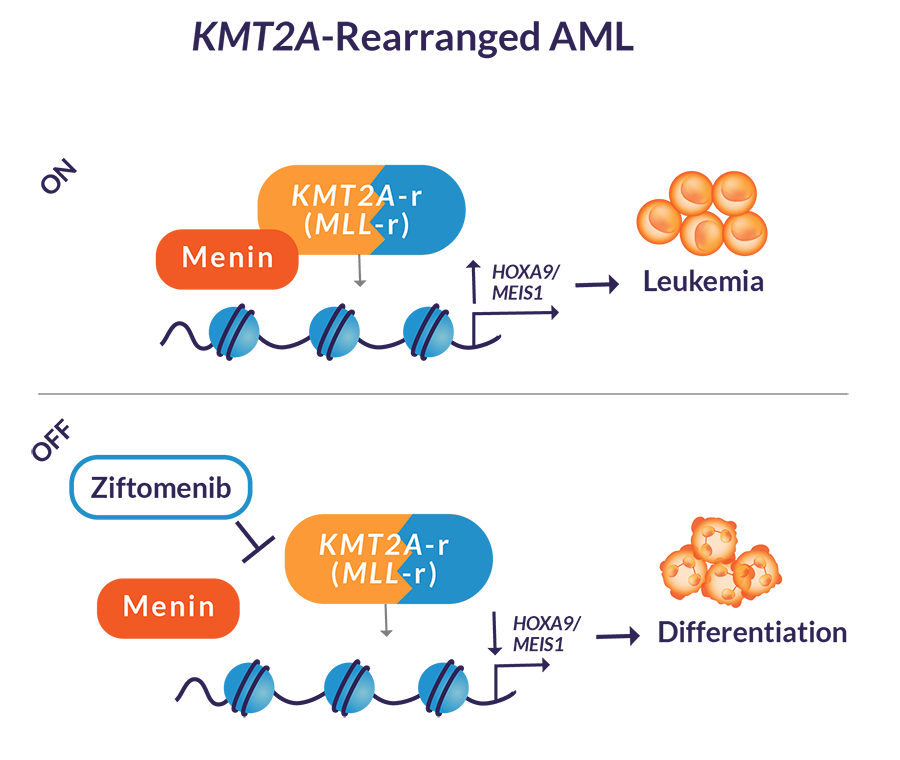
Our menin inhibitor, ziftomenib, inhibits the interaction of two proteins, menin and KMT2A/MLL, that, when fused together, are responsible for survival and proliferation of certain kinds of leukemia cells. When this process is inhibited, cancerous juvenile cells are thought to mature into white blood cells.
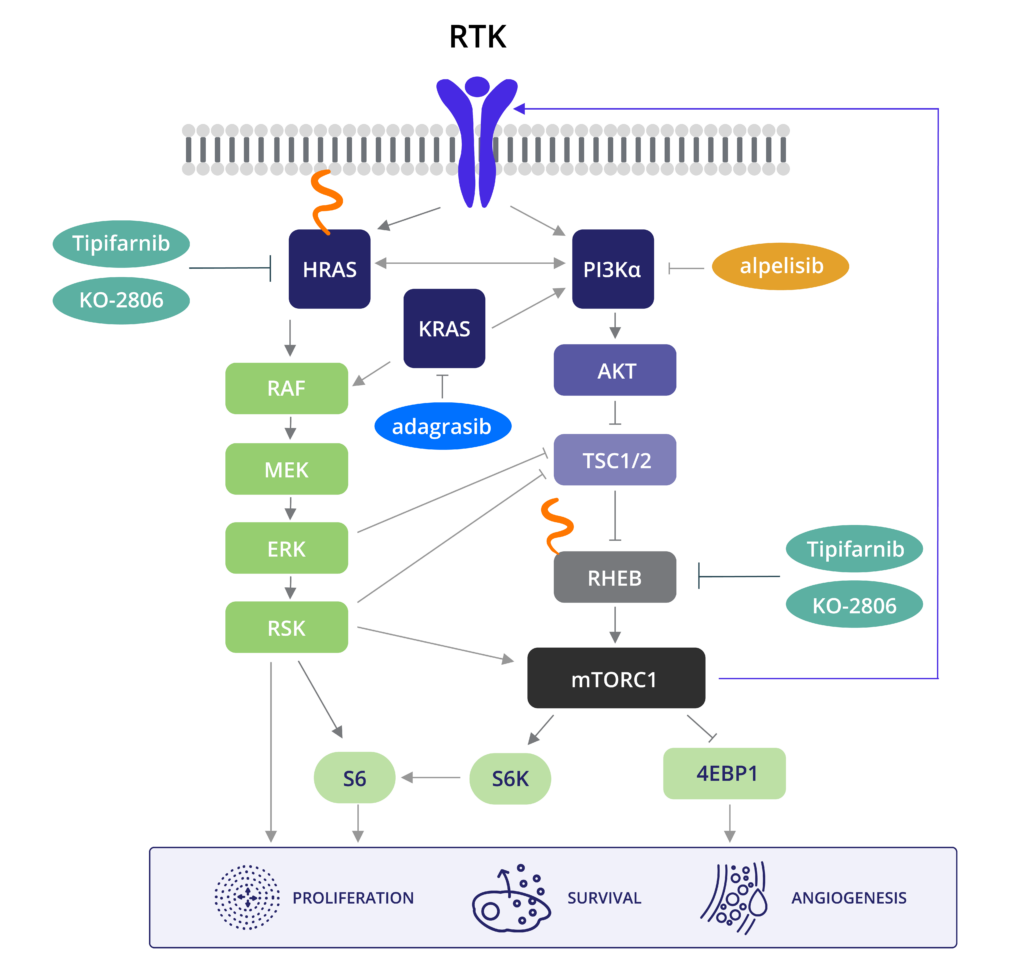
Imagine if a single key had the potential to unlock multiple targeted treatment paths for a range of difficult cancers. A class of medicines known as farnesyl transferase inhibitors may hold that ability.
Farnesyltransferase is an enzyme that plays a key regulatory role in cellular pathways that drive resistance to a range of targeted therapies in different types of tumors. By inhibiting the enzyme’s function, we believe we can reshape combination treatment options for many cancers.
Darlifarnib (KO-2806) is an investigational potent next-generation inhibitor of farnesyl transferase designed to potentially improve upon earlier FTI drug candidates.